A leak detection Tulsa call is the diagnostic-first approach to plumbing problems that don’t have an obvious source. High water bills with no visible cause, damp carpet over a slab, ceiling stains spreading slowly, wet patches in the yard during dry weeks — these are the symptoms that drive leak detection scope. The deliverable is a precisely located leak point ready for repair, often before any wall or slab gets opened.
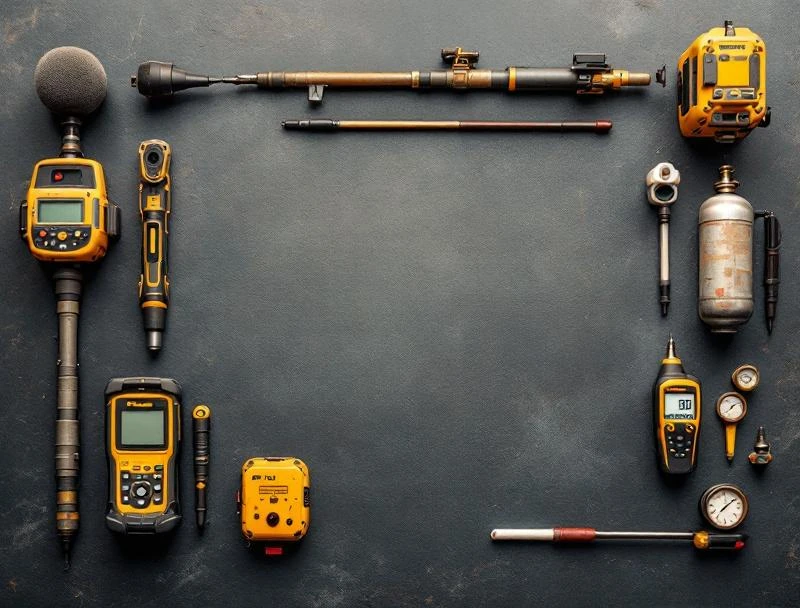
The diagnostic stack: acoustic ground microphone (SubSurface LD-12, Goldak 902B), thermal imaging (FLIR E8 Pro, FLIR E96), tracer gas detection with 5% hydrogen / 95% nitrogen forming gas (Sensit HXG-3), and pressure-decay testing for system isolation. Each method has a fit; combining them gives reliable location to within 6-12 inches.
Finding the Leak Before You Open the Wall
Standard pre-cut detection on a Tulsa slab home: pressurize the supply system and isolate hot side vs cold side at the manifold, listen acoustically for leak signature, scan thermally for hot-side warm spots, run tracer gas if acoustic and thermal are inconclusive. The result is a marked surface point with depth estimate, ready for repair planning.
The economic case for detection-first: a single acoustic locate at $250-$500 followed by a targeted spot repair beats the alternative of exploratory cutting. For slab homes especially, opening multiple slab points to find a leak by trial-and-error costs far more than the diagnostic plus single targeted repair.
The detection deliverable also stands alone for insurance documentation, even before any repair is committed. Date-stamped images, moisture-meter readings, and acoustic-locate marks are the package that unlocks claim approval.
How Tulsa Leaks Hide — Slab, Wall, Yard, and Ceiling
Leak categories by location: slab leaks under concrete in 74133 South Tulsa, 74137 Southern Hills, 74135 Patrick Henry post-1960 housing. Wall leaks in pre-1940 Cherry Street (74104) and Maple Ridge (74114) with original copper or galvanized supply behind drywall. Yard leaks at the service line in 74063 Sand Springs, 74066 Sapulpa, 74107 West Tulsa river-side soil. Ceiling leaks from upstairs fixtures or HVAC condensate lines.
Each category has a dominant detection method. Slab leaks favor thermal (hot-side) or acoustic with tracer-gas backstop. Wall leaks use moisture-mapping and acoustic. Yard leaks use ground-microphone acoustic plus thermal where surface conditions allow. Ceiling leaks need fixture-isolation diagnostic plus drip-path tracing.
The diagnostic sequence adapts to symptom location. We assess the symptom on the call and bring the appropriate equipment to the dispatch.
The Acoustic Method and What It Picks Up
Acoustic leak detection works because pressurized water escaping a small hole produces a high-frequency hiss in the 500-3000 Hz range. The pipe-in-slab acts as a sounding chamber; the leak signature transmits through concrete to the surface where a ground microphone with headphones can detect it.
SubSurface LD-12, Goldak 902B, Goldak GA-92XTd are dominant ground microphones. Fluke ii900 acoustic imager uses an array of microphones to produce a visual heat-map of acoustic emissions. In-wall acoustic probes for behind-wall leaks. Frequency filtering on modern equipment isolates the leak signature from ambient noise (HVAC, traffic, refrigerator).
Acoustic precision typically resolves the leak point to within 6-12 inches in Tulsa slab homes. Cold-side leaks produce weaker signals than hot-side because heated water has more dissolved gas that pops out at the leak point, amplifying the acoustic emission.
Thermal Imaging on Slab and Behind Drywall
Thermal imaging detects surface-temperature gradients with 0.05°C resolution. A hot-side slab leak heats the slab above; the thermal camera picks up the warm spot through carpet, pad, tile, or hardwood. FLIR E8 Pro and FLIR E96 are dominant residential thermal cameras; Fluke TiX580 is a high-end alternative.
Thermal works well on hot-side slab leaks. It works moderately on hot-side wall leaks (warm spot on drywall surface). It doesn’t work on cold-side leaks because there’s no thermal contrast — water at supply temperature 50-60°F is close enough to ambient that no signature appears.
For behind-wall leaks where acoustic alone isn’t conclusive, thermal scan plus moisture mapping (pinless and pin-type meters) localizes the moisture extent before drywall cuts.
Tracer Gas When Acoustic Goes Quiet
Tracer gas detection is the gold standard for cold-side and very small leaks. The procedure: isolate the suspect line, evacuate residual water, charge with 5% hydrogen / 95% nitrogen forming gas at 50 psi, sweep slab or wall surface with a Sensit HXG-3 semiconductor sensor. Gas escapes through the leak and is detected at parts-per-million levels at the surface.
Inficon Sensistor is an alternative tracer-gas detector. Helium leak detector is the highest-precision option (used in pharmaceutical and aerospace applications) but rarely needed for residential leak detection.
Tracer gas is non-toxic and non-flammable at the 5% hydrogen mix concentration. It’s the right method when acoustic and thermal are inconclusive, particularly for cold-side leaks under slab.
Pressure-Decay Testing the Whole System
Pressure-decay testing confirms whether a leak exists before location work begins. Procedure: isolate the test section by closing all relevant shutoffs, pressurize to known psi, watch the gauge over a defined period, calculate decay rate.
For typical Tulsa residential supply at 60-80 psi, holding pressure for 30 minutes with no measurable drop confirms a leak-free supply system. Pressure drop indicates leak somewhere in the test section. Sub-isolation (closing additional valves to narrow the test section) progressively localizes the leak zone.
The pressure-decay test is the right starting point for any unexplained-symptom leak investigation. It confirms the existence and rough zone of the leak before committing to detailed location work.
Camera, Dye, and Moisture Mapping
Drain-side camera inspection identifies cracked sewer lines, root entry points, and broken laterals using RIDGID SeeSnake push-camera systems. Camera-and-sonde location with NaviTrack II pinpoints the defect surface position.
UV dye injection identifies slow drainage paths through specific fixtures or HVAC condensate lines. Dye is added to the suspect water source and a UV light reveals dye paths. Useful for shower-pan failures and condensate-line tracing.
Moisture mapping uses pinless meters (capacitance-based, Tramex CMEX II) and pin-type meters (resistance-based, Delmhorst BD-2100, Protimeter MMS3) to map the extent of moisture in walls and floors. The moisture map shows leak progression and helps differentiate ongoing leak from historical event.
The Leak Report — What Insurance and Restoration Need
Insurance documentation requirements typically include date-stamped thermal images, moisture-meter readings, acoustic-locate marking, and a scope-of-loss letter linking the leak source to the resulting damage. Leak-detection deliverables that omit any of these can result in claim denial.
Standard documentation package: written narrative of detection methods used, photographs of all detection equipment in use at the leak site, recorded thermal images with timestamp overlay, moisture-meter reading sheet with location grid, acoustic-locate sketch with marked leak point, and scope-of-loss letter.
Restoration coordinator handoff includes the detection package plus access notes — where to enter, what to protect, and any concurrent plumbing repair scheduling. We work alongside Tulsa-area restoration contractors familiar with insurance carrier expectations.
Acoustic Leak Detection
Standard acoustic detection sequence: pressurize the supply system at full pressure, isolate the test zone, walk the suspect area with a ground microphone, listen for leak signature with headphones, mark the surface at maximum signal strength, verify with secondary listening point.
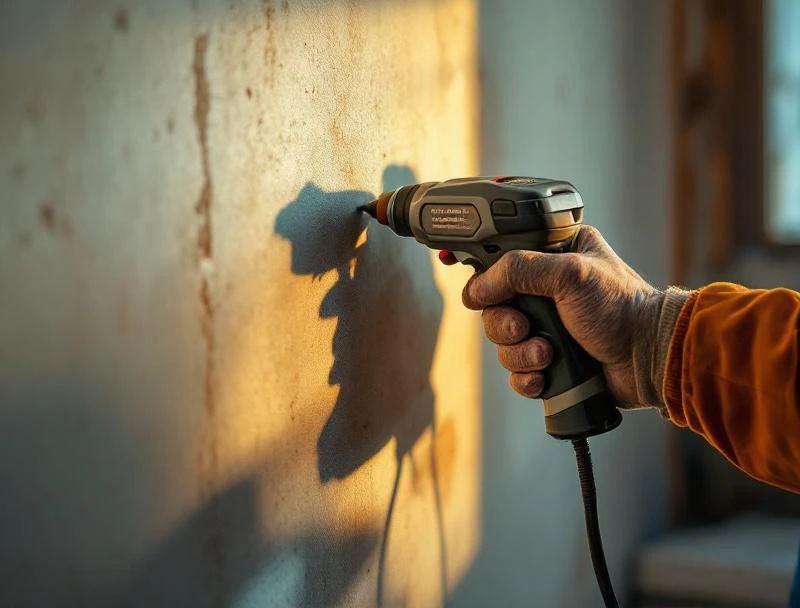
Frequency filtering on modern equipment isolates the 500-3000 Hz leak signature from ambient noise. Multi-microphone arrays (Fluke ii900) produce visual heat-maps of acoustic emissions. In-wall probes access wall cavities through small drill holes for behind-drywall detection.
Acoustic precision: 6-12 inches typical on slab; 4-8 inches on wall cavities; 12-18 inches on yard service lines (deeper depth reduces signal strength).
Thermal Imaging Leak Detection
Standard thermal detection sequence: shut off the water heater for 30 minutes to allow slab to equalize temperature (eliminates baseline thermal noise), restart the heater, scan suspect area with thermal camera over 30-60 minutes as hot-side leak warms the slab.
Thermal contrast on a hot-side slab leak typically reaches 2-5°F differential against surrounding slab — easily detectable with 0.05°C-resolution thermal camera. Cold-side leaks may produce 0.5-1°F evaporative cooling signature but the signal is weak and unreliable.
Best applications: hot-side slab leaks, hot-side wall leaks behind drywall, identifying water flow paths in finished surfaces.
Tracer Gas Leak Detection
Tracer gas detection sequence: isolate the test section, drain residual water from the line, charge with 5% hydrogen / 95% nitrogen forming gas at 50 psi, sweep slab or wall surface with semiconductor sensor at slow rate (the gas escapes slowly and detection requires careful systematic scanning).
Sensit HXG-3 is the dominant residential tracer-gas detector. Inficon Sensistor is an alternative with similar capability. Helium mass-spectrometer leak detector is the high-precision specialty option.
Best applications: cold-side leaks where acoustic is weak, very small leaks below acoustic threshold, irregular-pressure leaks that don’t sustain acoustic signature, and pre-cut confirmation when other methods are inconclusive.
Pressure-Decay Testing of Supply System
Standard pressure-decay test: 0-160 psi gauge with isolation kit, close all relevant shutoffs, pressurize to 60-80 psi (residential service pressure), monitor for 30 minutes, calculate decay rate.
For a leak-free supply system at 60-80 psi, pressure should hold within 1-2 psi over 30 minutes (small variation from temperature and gauge precision is normal). Decay greater than 5 psi over 30 minutes indicates active leak. Sub-isolation progressively narrows the leak zone.
The pressure-decay test isolates supply-side from drain-side and confirms which side has the leak before any detailed location work. Hot-side / cold-side differentiation by isolation valve mapping helps target the subsequent acoustic or thermal detection.
Sewer and Drain Camera Inspection
Camera-and-sonde inspection follows the same toolset as sewer-line repair work. RIDGID SeeSnake push-camera with NaviTrack II sonde locator marks defects on the surface above. Drain-side leaks (cracked laterals, broken stacks, root invasion) require camera rather than acoustic.
For residential drain-side leak investigation, camera inspection from accessible cleanout reveals the failure mode and location. Repair scope follows the diagnostic — typically sewer-line repair (trenchless, open-trench) rather than detection alone.
Camera-and-sonde location of a cracked main is the same diagnostic toolset, and sewer line repair scope is the natural follow-on when the located break is on the drain side rather than supply.
High Water Bill Investigation
The diagnostic sequence for high-bill investigation: verify with City of Tulsa Water billing department that the bill reflects metered usage (not estimate), check the meter dial with all fixtures off (running meter = active leak), test fixture-by-fixture isolation, scan suspect zones with appropriate detection method.
Common findings: running toilet (single failed flapper adds $50-$200/month), yard service line leak (silent until visible wet patch), hidden slab leak (no visible signature until damage shows), failed irrigation valve, or persistent dripping fixture. Rare findings: hot water heater T&P drip masquerading as supply leak, water-powered backup sump cycling unintentionally.
Investigation typically completes in 2-3 hours and produces a definitive cause. We provide written findings for City of Tulsa Water billing dispute submissions when the investigation reveals a leak that’s been billed at full rate.
Slab Leak Locate (Pre-Repair Diagnostic)
Slab leak locate is its own deliverable, separate from slab leak repair scope. The detection result — marked surface point, depth estimate, hot-side / cold-side differentiation — is the input to the repair-decision process.
Many homeowners commission detection first and use the result to evaluate spot-repair vs reroute vs epoxy-lining options before committing to repair. Detection alone runs $300-$800 (acoustic + thermal) or $700-$1,400 (with tracer gas) in the Tulsa market.
For 74133 South Tulsa and 74137 Southern Hills slab homes, the detection deliverable also supports insurance documentation, which often unlocks coverage for the resulting damage even if the pipe repair itself isn’t covered.
Acoustic and thermal pinpointing is the deliverable, and slab leak repair Tulsa OK scope picks up at the marked spot for the cut, splice, or reroute decision.
Yard / Service Line Leak Locate
Standard yard locate procedure: pressurize the supply at full pressure, walk the lateral path with a ground microphone, listen for leak signature, mark the surface at maximum signal strength, depth-estimate via signal-strength gradient.
Hard surface (driveway, sidewalk) provides good acoustic transmission. Soft surface (lawn, garden) has higher signal attenuation but moisture symptoms (greener grass, soft soil) often confirm leak location independently. Soil-moisture probe measures soil saturation to verify leak presence.
Yard leak locate is the diagnostic-only deliverable when the customer wants pinpointing before committing to repair. Standard scope runs 1-2 hours and $250-$500 in the Tulsa market.
Yard-side acoustic locate that pinpoints a service-line break shifts the work into Tulsa water line repair scope, and the locate report is the input to the trench plan.
Behind-Wall Leak Locate
Behind-wall leaks present as drywall stains, mildew odor, or moisture detectable with pinless meter. The diagnostic sequence: pinless moisture meter scan (capacitance-based detects moisture through finished surface), pin-type meter for quantitative measurement at specific depth, thermal scan, acoustic probe through small drill holes if needed.
Tramex CMEX II (pinless) and Delmhorst BD-2100 (pin-type) are dominant moisture meters. Protimeter MMS3 combines both modes. The moisture map informs targeted drywall cuts for repair access.
Behind-wall partial splits leak too slowly to flag immediately, and burst pipe repair in Tulsa scope picks up after the moisture-mapping confirms the location.
Ceiling Leak Locate (Drip Path Tracing)
Ceiling leaks have distinct diagnostic logic vs slab or wall. Water travels along structural members (joists, beams) before dripping at the lowest accessible point — the visible drip location is rarely directly below the leak source.
The diagnostic sequence: identify the visible drip pattern, isolate upstairs fixtures one-by-one (run each fixture, watch the drip rate change), rule out HVAC condensate (check HVAC line routing above the ceiling), rule out roof leak (verify weather correlation), trace the water path along structural members.
For dry-weather ceiling leaks, supply-side or drain-side fixture leak above is the typical cause. For wet-weather ceiling leaks, roof leak or HVAC condensate are more likely.
Insurance and Restoration Documentation Package
Standard documentation package for insurance submission: written narrative of detection methods used, photographs of detection equipment at the leak site, recorded thermal images with timestamp overlay, moisture-meter reading sheet with location grid, acoustic-locate sketch with marked leak point, scope-of-loss letter linking leak source to damage.
Restoration coordinator handoff with detection package, site access notes, and concurrent plumbing repair coordination. Most Tulsa-area restoration contractors familiar with insurance carrier expectations work with our documentation format directly.
The documentation package is included with every leak detection job at no additional charge for our standard format. Custom documentation for specific carrier requirements or legal proceedings is available at $100-$250 add-on.
Pre-Purchase / Pre-Inspection Leak Survey
Pre-purchase leak surveys have grown as a separate scope from standard home inspection. The deliverable is structured for closing-table negotiation use.
Standard survey scope: pressure-decay test of supply system, thermal scan of accessible slab and walls, acoustic scan of suspect zones, sewer camera inspection of main lateral, moisture mapping of any suspect areas. The result is an 8-12 page report with timestamps, defect images, severity grading, and approximate repair-cost estimates.
Particularly valuable for older Tulsa neighborhoods (74104 Cherry Street, 74114 Maple Ridge, 74105 Brookside) where supply and drain failures are common. Buyer’s agents and home inspectors increasingly request the survey as a routine inspection step.
Tulsa-Specific Factors That Shape Leak Detection
City of Tulsa Water at 60-90 mg/L hardness from the Lake Spavinaw watershed creates a specific corrosion pattern in copper supply — pinhole leaks in 74133 South Tulsa, 74137 Southern Hills, 74135 Patrick Henry at the 30-50 year mark. Tulsa supply pressure 60-80 psi affects acoustic-detection signal strength.
Oklahoma red-clay expansive soil drives slab and yard leak distribution — slab leaks concentrate in post-1960 slab-on-grade housing, yard leaks concentrate in 74063 Sand Springs, 74066 Sapulpa, 74107 West Tulsa river-side soil. Tulsa frost line ~12 in affects yard-line and discharge freeze-leak patterns.
February 2021 Uri freeze legacy: slow-developing leaks still surfacing 5 years later. Many “new” leak detection calls in 2024-2026 trace to Uri-era damage that’s progressed slowly enough to evade earlier detection.
Oklahoma Plumbing Context for Leak Detection
Leak detection scope itself doesn’t generally require Oklahoma CIB licensing — anyone can run acoustic and thermal diagnostic. But work that follows detection (slab repair, line replacement, repipe) does require licensed plumbing contractor credentials. Verify any contractor at cib.ok.gov.
For high-water-bill investigations that involve the customer-side meter or service line, City of Tulsa Water customer-service can clarify the demarcation and provide meter-reading verification. City of Tulsa Cross-Connection program governs RPZ backflow assemblies and may interact with detection scope when the suspected leak involves an RPZ unit.
Insurance and restoration coordination follows Oklahoma carrier conventions. Documentation framing matters significantly for claim outcome.
Hidden leaks rarely surface on a convenient schedule, and our Emergency Plumber Tulsa dispatch is the same team that runs acoustic, thermal, and tracer-gas locating any night of the week.